Fairbanks, Alaska, USA
Sites: Rod's Dog Mushing, Santa Claus House, Museum of the North at UOF Alaska, Chena Hot Springs
BUDGET
Stay: Brad's AirBnB
2026-01-07
Mom always had a dream to see the northern lights. This was our trip to go see it as a family.
It takes some luck to see the lights: the night has to be clear, there has to have been solar activity and you need to be in a dark place. And it's primarily a night-time activity. So we filled the days with other musings.
Dog sledding -- or dog mushing -- is exactly what you'd imagine it to be: getting pulled around by eight cute dogs. They're incredibly loud whiners while waiting to take off, but once they set out, they're focused on the task. Our musher was from Iowa originally, and had a dream to be a musher since he was a kid. He told us that him and his roommate, another musher on site, owned and trained all of these dogs. I can't even begin to imagine what it would be like to raise 40 or so ravenous dogs with huge appetites.
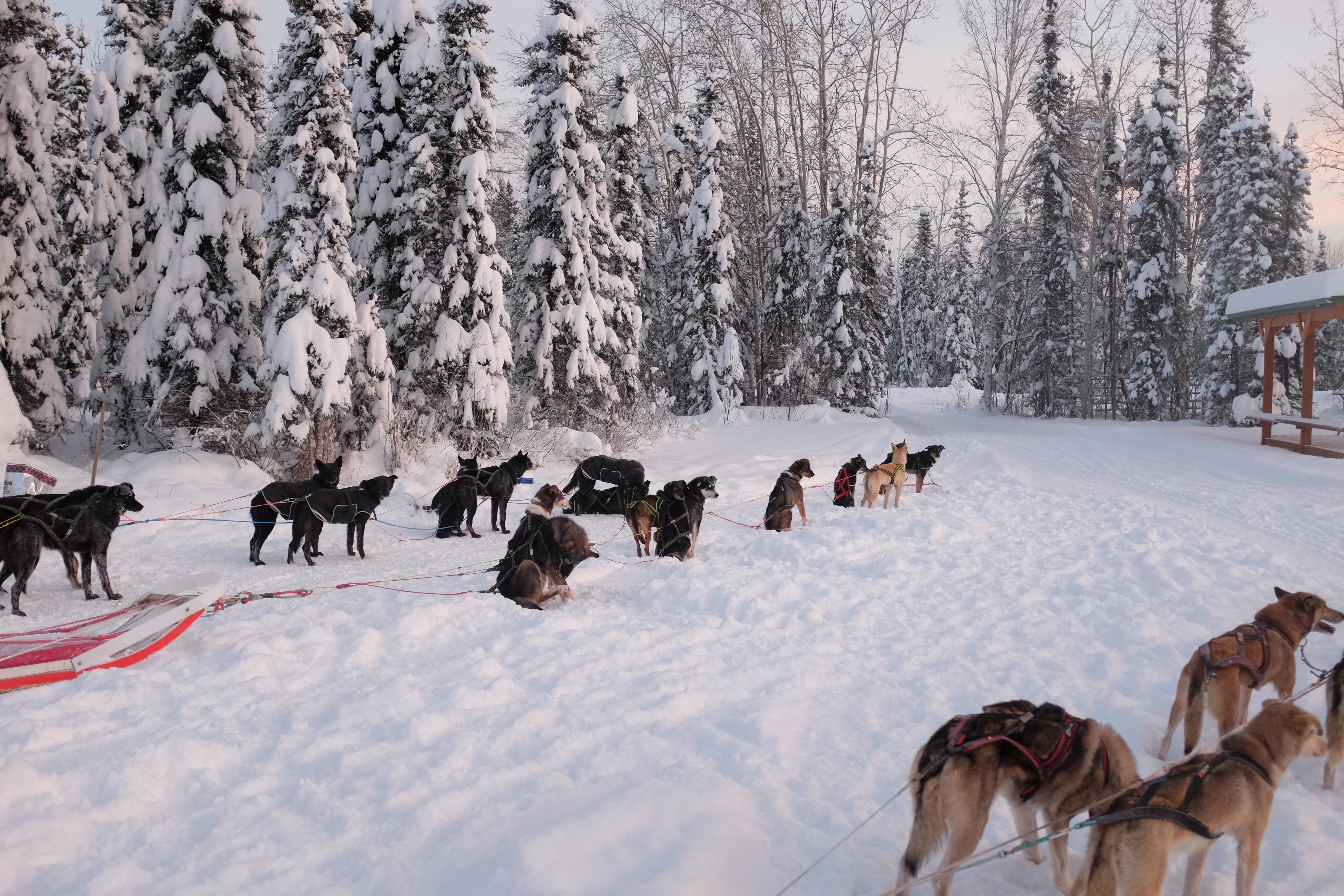
The mushers have two seasons: competition, and off-season. On the off-season, they run these tours to help feed the dogs, making it a sort of self-sustaining business. But during competition season, they travel over 1,000 miles across Alaska and Yukon in competitions. For us, 30 minutes outside was already a struggle. Imagine what thousands must feel like?
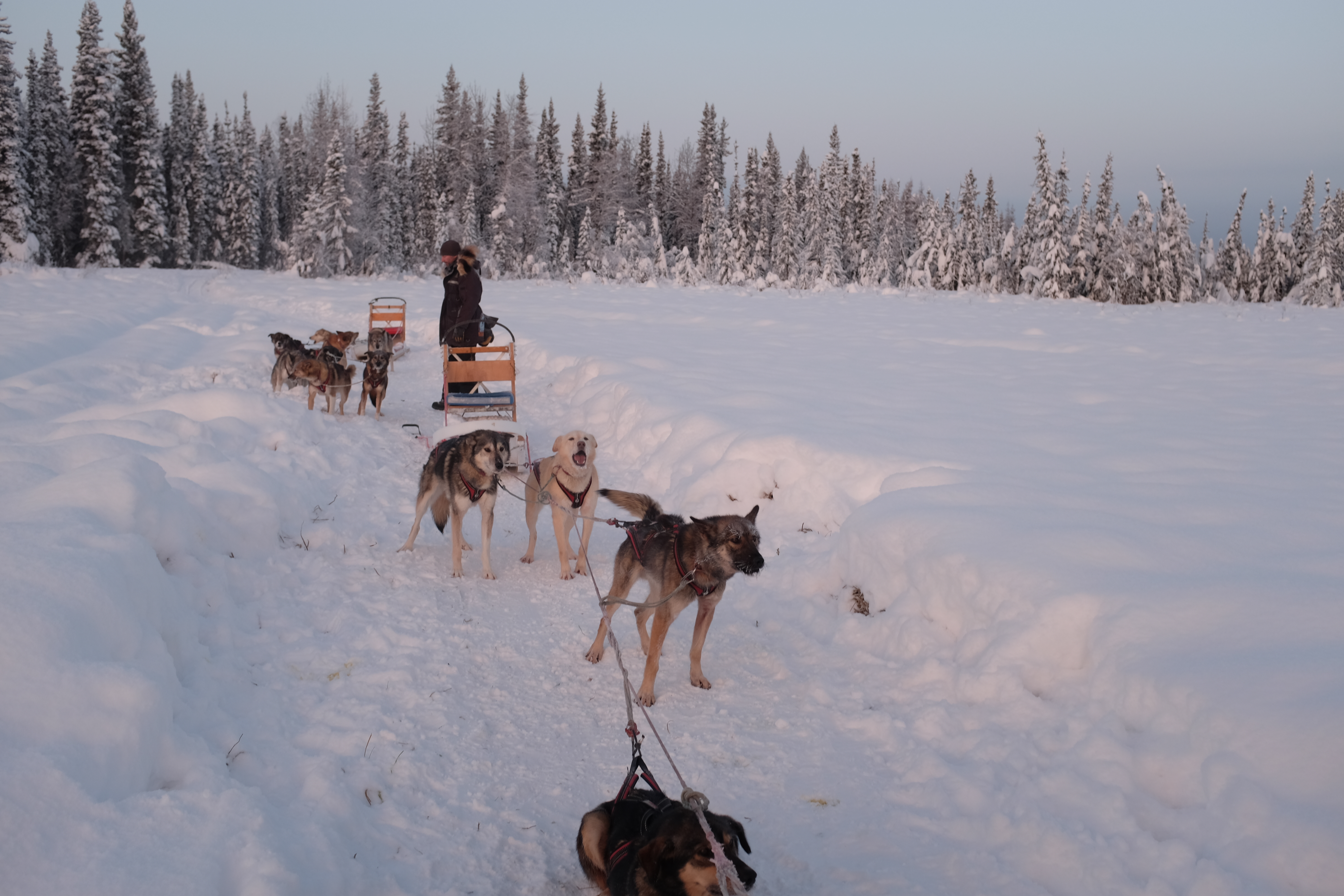
There is one aspect to this that is not what you would imagine it to be; a less romantic side. It all seems cute and novel that you're being lugged around by dogs, but you're also downstream eight butts that fart and poo at ease while towing the sled. So while romantic, there's also a stench.
My broader opinions of Fairbanks is that there is no single-thing they're known for, and so the "tourist" sites are a random collection of man-made attractions. In fact, the town itself is relatively artificial. Surely, an interior, tundra vastland with only a few rivers would hardly be a place for subsistence for the indigenous. Upon looking at the history, my suspicions were confirmed. Fairbanks was largely a gold rush town and so its population would ebb and flow with economic opportunity. So it's a town that was built by settling for economic opportunity rather than truly subsistence-based. The meta-thought corollary is that that history is precisely the culture (or lack of culture) in the town.
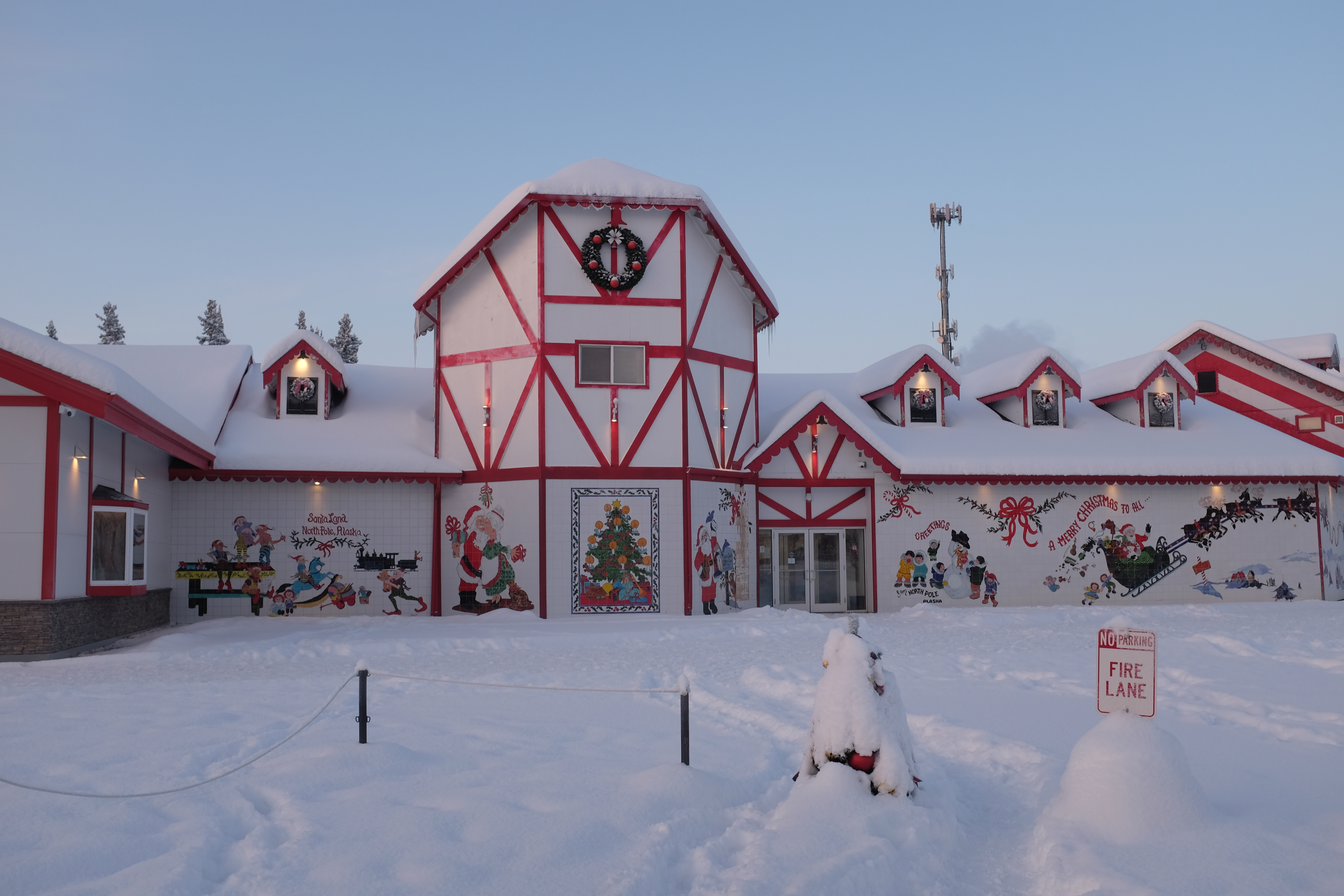
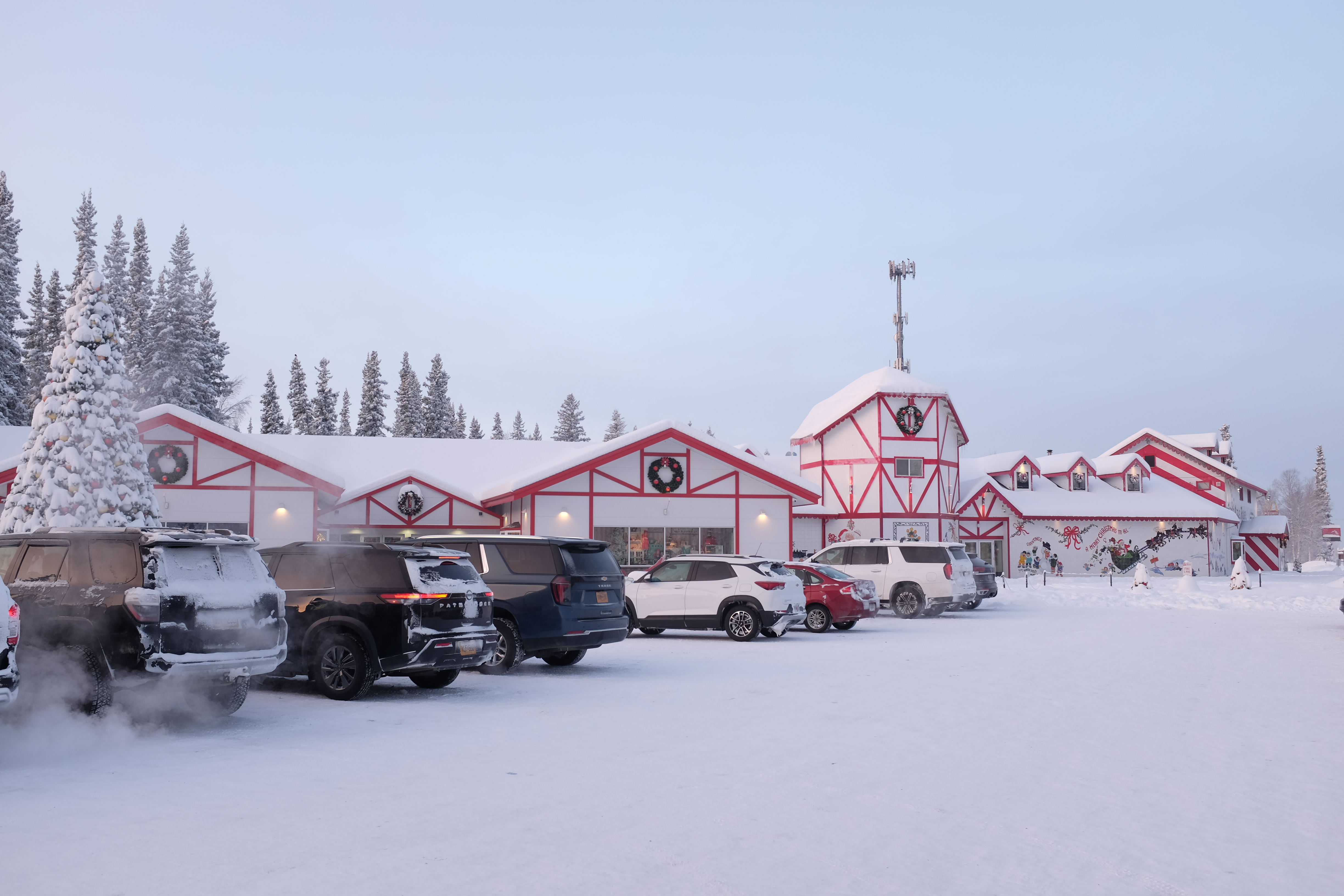
One such example of this is Santa Claus House. I wasn't sure what it was before going, but once we arrived we were confronted with what my brother called "A Chuck E. Cheese interpretation of Santa's workshop". It was just a gift shop built to look like Santa's workshop (surely, there are tons of these globally). Inside, Santa was there. He was Russian, based on the accent (I had not realised Santa was Russian) and we took a family picture. It was naff to the point of bemusement. There were also some reindeer around. Otherwise, there was little remarkable about this place.
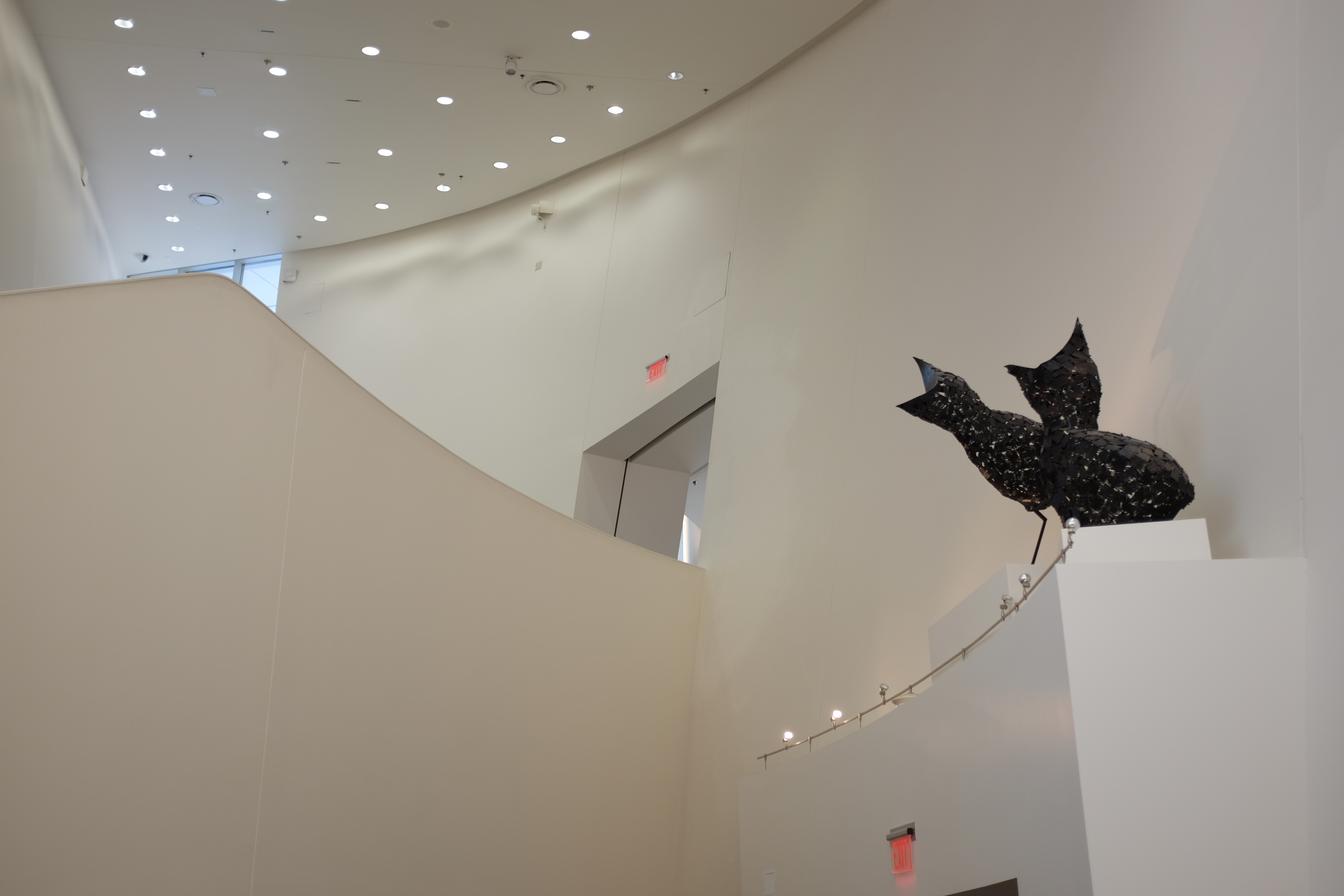
But then another man-made attempt at culture helped shift my mind, and that was the University of Fairbanks, Alaska's Museum of the North. The museum itself wasn't large, and maybe slightly overpriced, but research institutions' museums often have good curations. There were a lot of b-sides to history, like segments on Russian Alaska, and Japanese internment for the few Japanese that resided here. Strangely enough, there were also a lot of Chinese exchange students in Fairbanks that frequented this museum. I guess it must be on the Red Note trail? (There were, in general, many Chinese tourists in Fairbanks).
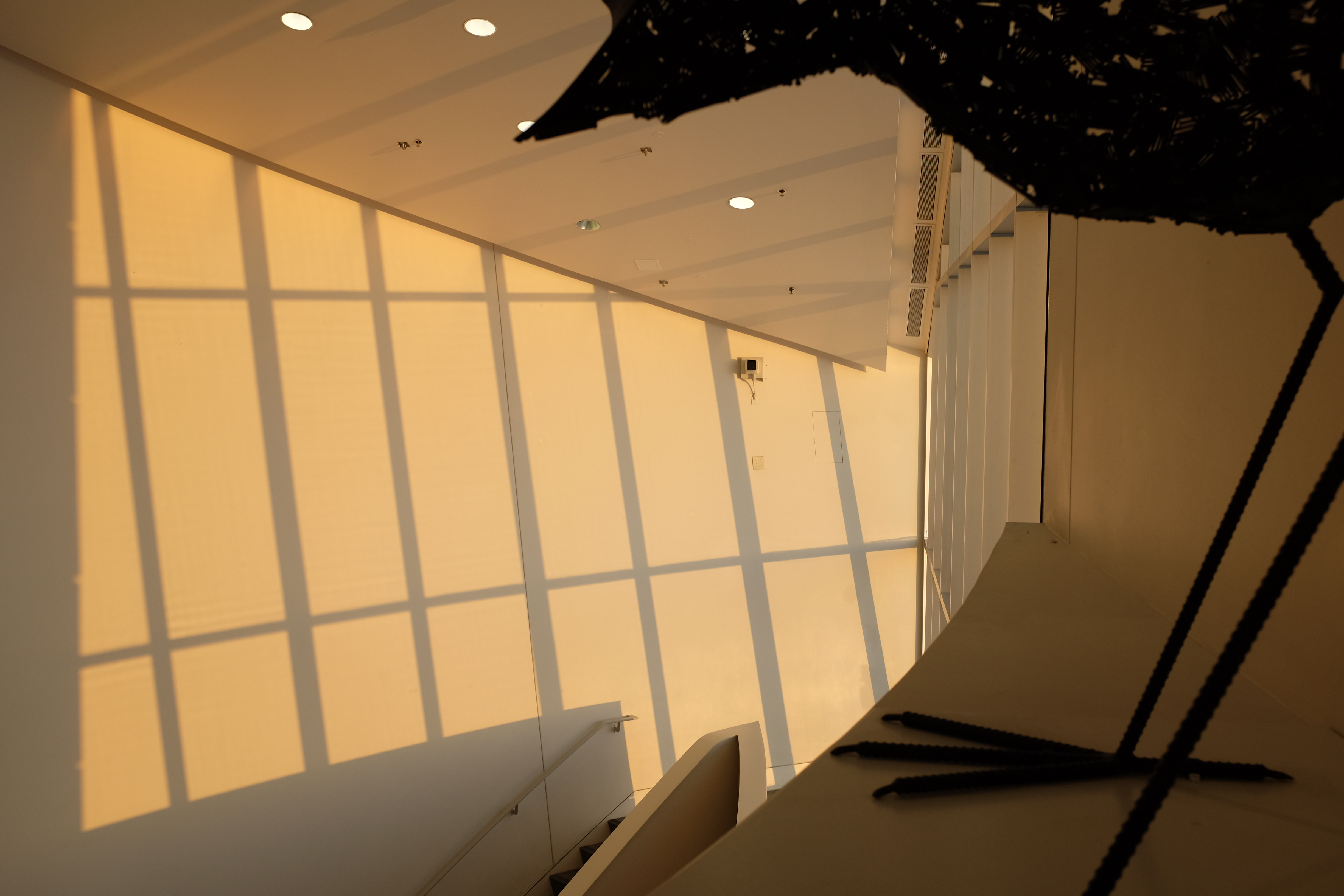
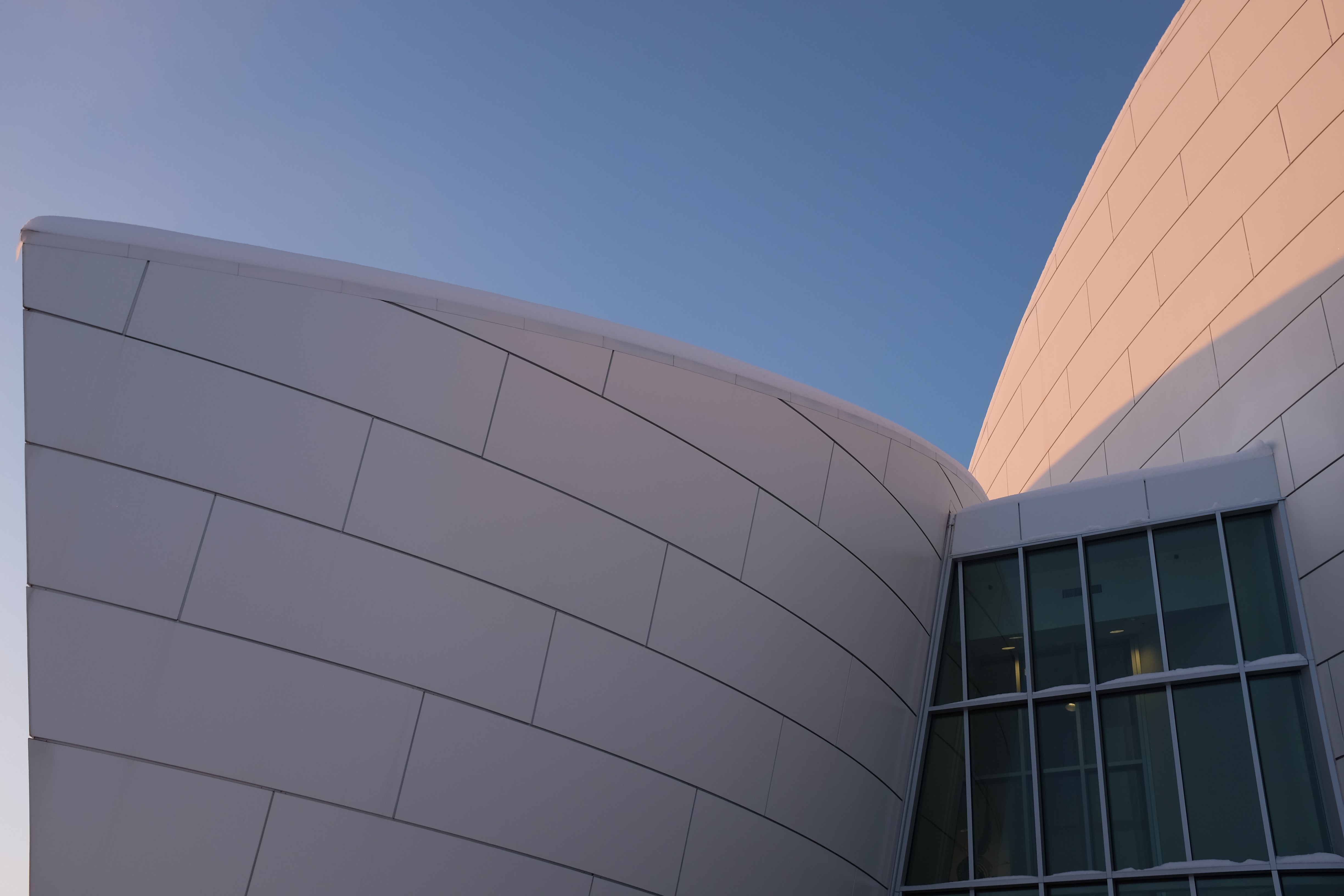
The Museum was also architecturally stunning. Cold weather-buildings often have a Scandic minimalism to them that fits the climate. Smooth surfaces, cool geometries and large windows defined the building. When the sun was up for the three hours that it was, the windows let light in in a stunning way.
Probably one of the most famous sites to go to is the Chena Hot Springs Resort based up in Chena. Alaska is considerably volcanic and so you do get natural hot springs. But this one is some strange fever dream of a guy that has Disneyfied the pool. In the middle of it, there is a random fountain. Surrounding it, there are several statues -- or what seem like statues -- covered in ice. Had we come in the summer, with the frost melted, it would probably look like some weird communal lake bath. The bath area also doubled as a sauna/jacuzzi area, so we spent some time bathing in there. Again, tons of Chinese tourists here.
In China and Japan, ice sculpture theme parks are done every year as part of winter celebrations. Chena Hot Springs also had an ice museum. Despite being much smaller, it has been maintained across the years, and so there are visible scars to the place. At the front of the museum on the wall, a faint angel-shaped dent was once where an ice angel hung, until it melted when someone left the door open one year. At the main hall, some jousting knights have bits of opaque ice stuck to it which were stepwise repairs made to them. The bar pillars were the same, looking like a patchwork of different pieces of ice from various years. The tour guide, from Florida, spoke about these intricacies to the building while pouring us some apple martinis served in ice glasses. These glassess were made for every day and carved inside, right in the entry hall.
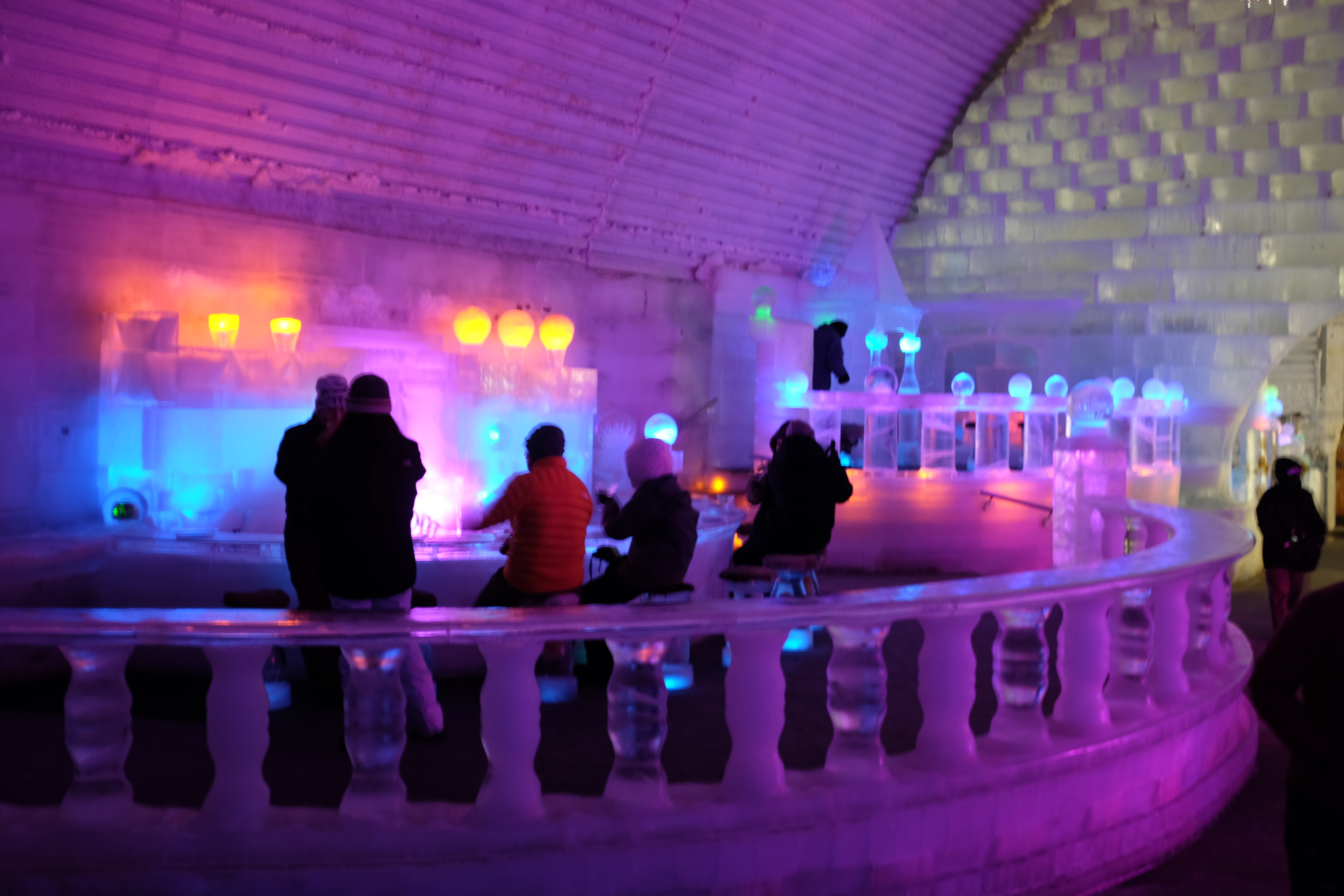
While not the most exhilarating place in terms of things to do, Fairbanks also offered some local charms of culture. Part of it comes from the history of the founding of the city: it has a strange confluence of not being part of the "lower 48", being formerly Russian-owned and now American-owned, and being a final arctic frontier. I was surprised at how many workers were from Russia, and how many tourists were from China. Most of the outsiders here were from the midwest and the south who wanted a dramatic temperature shift, were chasing a dream, or seemed like this was the final place they could go to. Kind of a lost land of refugees.
Something else that surprised me was the restaurant experiences. It's the second largest population centre in Alaska, so you have your standard downtown. But then there were quirky restaurant concepts in the downtown that people would big up and recommend. We went to eat Alaskan barbecue (famous Alaskan barbecue?) run by southerners during an army-navy football match frequented by some army folks. There was also a random teppanyaki-style restaurant that had some 90s racialised interpretation of Japanese food, cooked by a Chinese chef, of course (it's called Shogun -- look it up. You wouldn't find much like that in the world these days).
Even the lifestyle out here was very different than the America I grew up in. Our driver, Kim, worked minimum wage jobs all her life and never had a "career". She finished college in her 30's and picked up the odd jobs she could get: previously, Little Caesar's, a strip club, and now as a driver for tourists. There was no sense of a career in the way that I know it -- in one field, moving up the ladder. I found that refreshing and sad at the same time. Refreshing because it's very on-the-nose about what "small-town" America living is like, and sad that the only ambition was to survive.
With all these quirks, I'm not really sure what to make of the city.
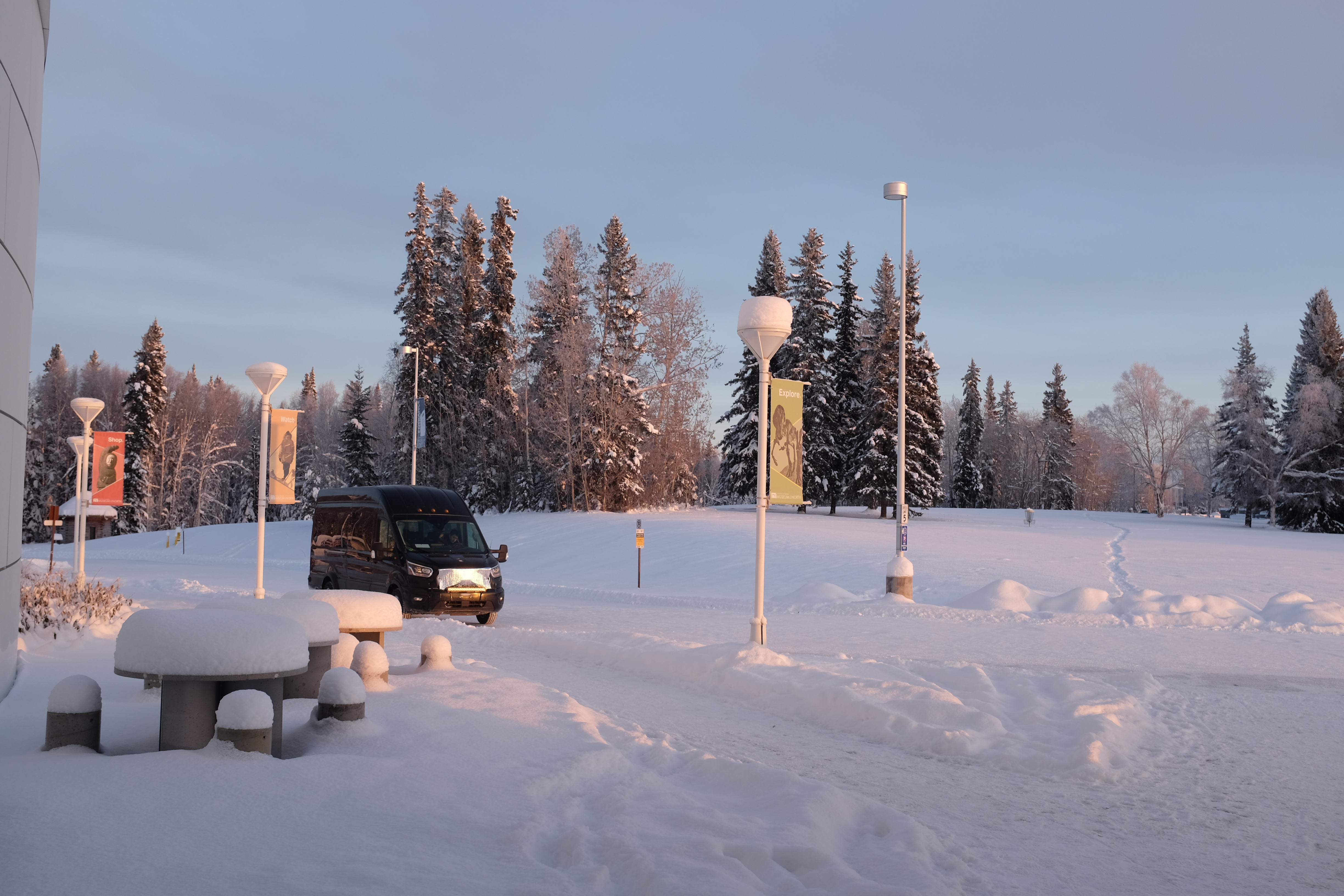
One of my favourite parts were the sunrises and sunsets. Daylight would only last about four hours, but on a clear day when the sun was out, it was brilliant. The sun only made a short arc in the sky, making it feel like a perpetual sunset against the sea of white outside. There was always a glow to the city.
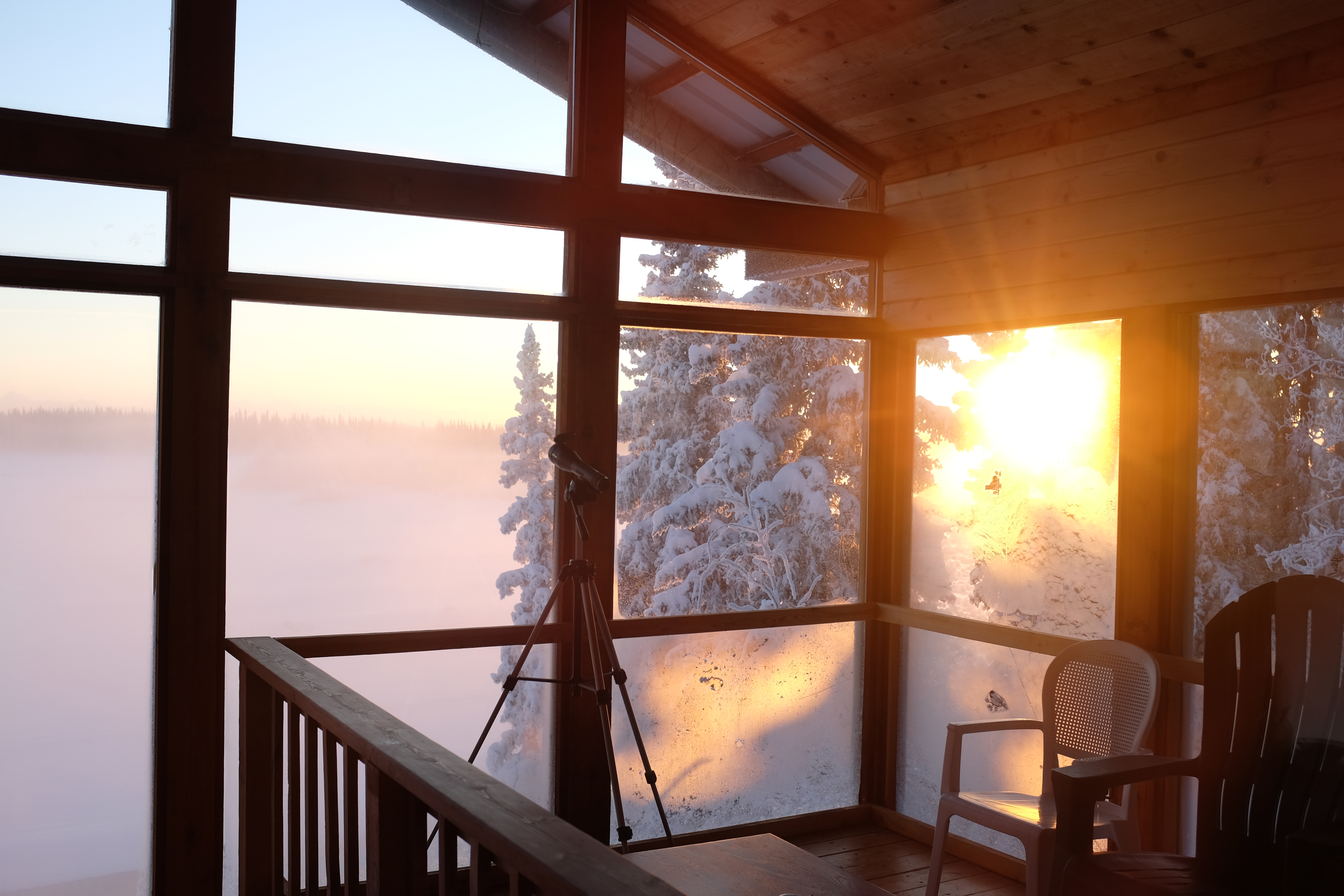
We ended up seeing the northern lights, on an unassuming day. The night before, we had driven up to Murphy Dome, supposedly the best viewing place, desperate to see it before we left. No luck. But on the last day all together, I went outside and looked up, and there it was, a curtain of green light. Maybe an omen for a good year ahead?